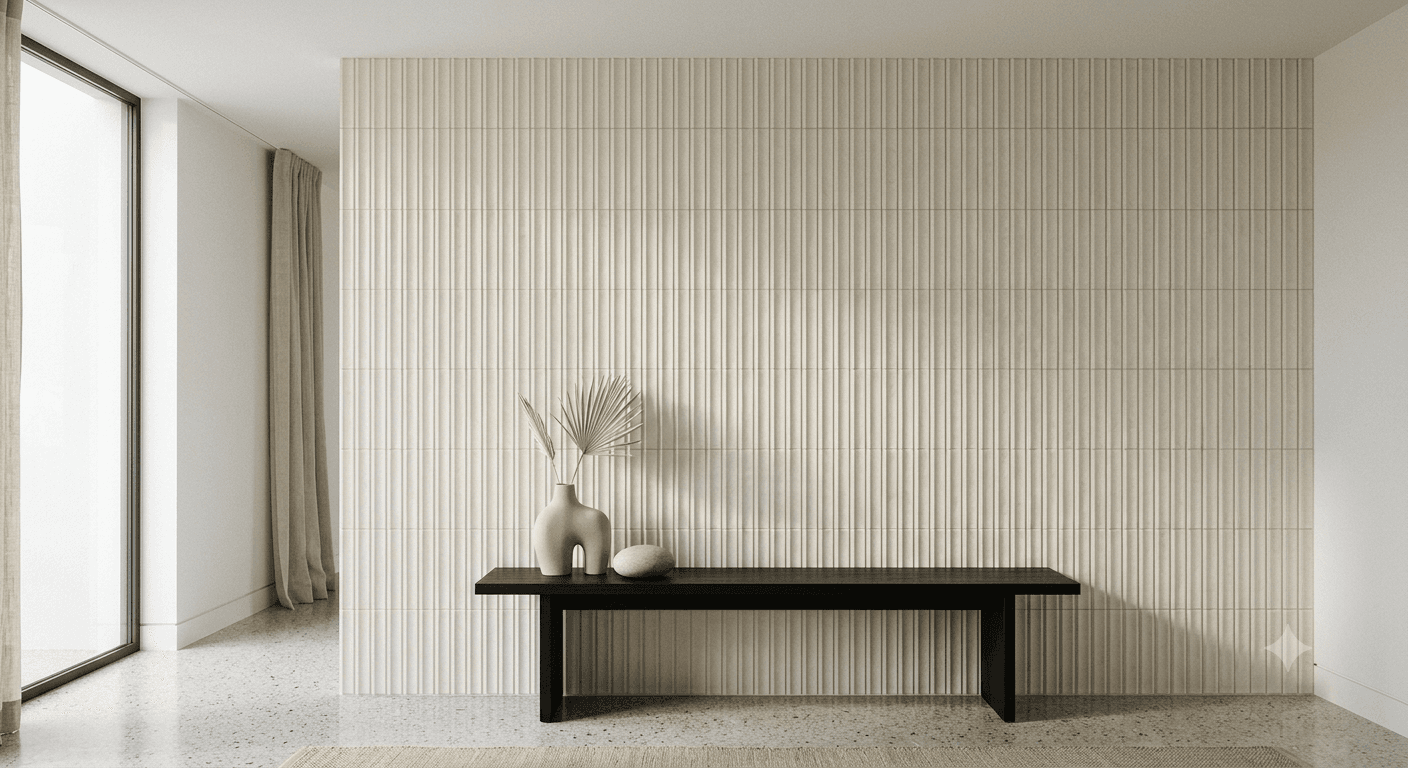
Fluted & Textured Ceramic Wall Tiles: The Biggest Wall Trend of 2026
Your walls are doing nothing. Four flat surfaces, painted or plain-tiled, holding the room together but adding zero character. Fluted and textured ceramic wall tiles fix that — without knocking anything down or spending a fortune.
In 2026, fluted, ribbed, waved, and sculpted ceramic surfaces are the single most visible wall tile trend in Indian homes. They turn ordinary walls into design statements, playing with light and shadow throughout the day to make a room feel alive.
This guide covers what textured ceramic wall tiles are, where to use them, how to pair them, and what to avoid.
What Are Fluted and Textured Ceramic Wall Tiles?
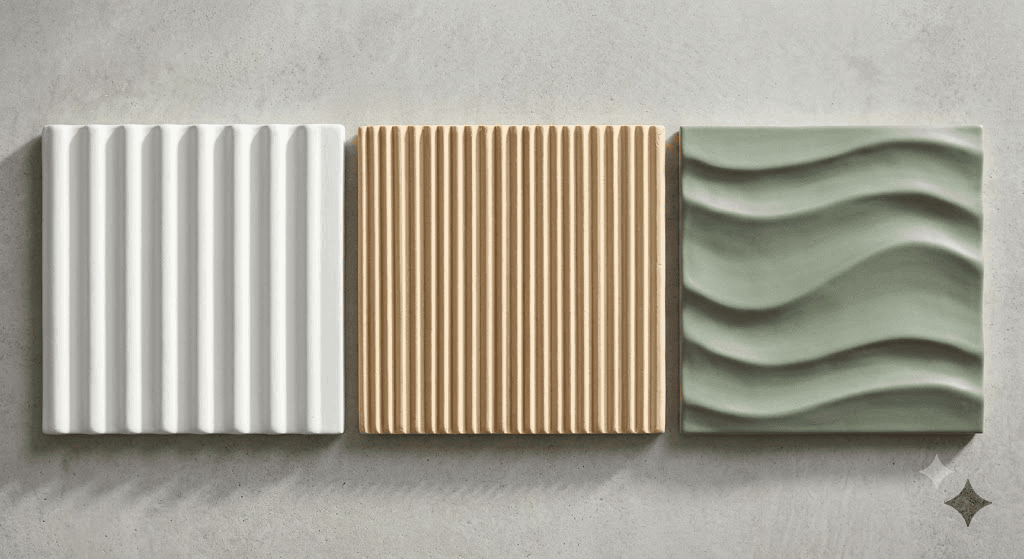
Fluted tiles have parallel ridges running vertically (or sometimes horizontally) across the tile surface. Ribbed tiles are similar but with tighter, more uniform grooves. Waved and sculpted tiles take this further — the surface has a flowing, three-dimensional form that changes appearance depending on where the light hits.
All of these fall under the broader category of 3D textured ceramic wall tiles.
The key difference from flat tiles: the surface relief creates moving shadows as natural or artificial light shifts during the day. A wall that looks subtle at noon looks dramatic by evening. That depth is what makes them so popular right now — you get visual impact without adding colour, pattern, or clutter.
“Honest note: These are ceramic wall tiles — suitable for walls only. Do not use them on floors. The ridged surface is not floor-grade and is difficult to clean underfoot.
Where to Use Textured Ceramic Wall Tiles
Bathroom Feature Wall
This is the most popular application in Indian homes right now. One full wall behind the vanity or behind the shower — in a matte white, warm beige, or soft grey fluted tile — transforms a basic bathroom into something that looks designed.
You don't need to tile all four walls. One textured wall paired with plain tiles on the remaining three is enough, and it keeps the budget in check.
Best tile tone for bathrooms: Warm ivory, off-white, sage green, or clay beige. Avoid high-gloss finishes on textured tiles — the grooves collect water marks and are hard to wipe down.
Living Room TV Wall or Accent Wall
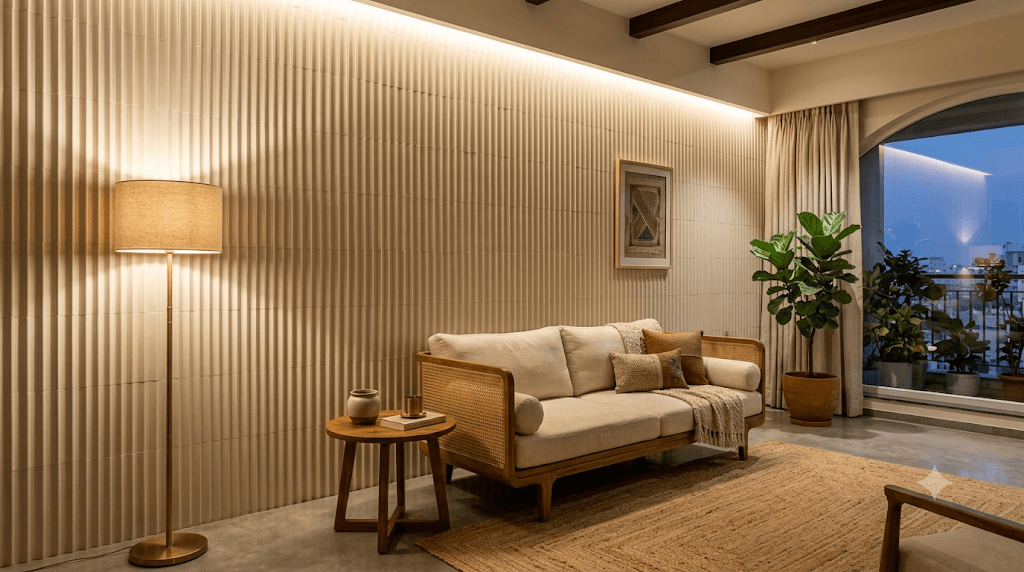
The TV wall is the most looked-at surface in any living room. A full-height fluted ceramic tile panel here adds texture without adding colour — it works with any sofa, any flooring, any décor style.
Pair with: Warm-toned wooden flooring or earthy GVT floor tiles, brass or matte black TV unit hardware, fabric or cane furniture.
Tile size tip: Taller tiles (600×1200mm portrait) emphasise the vertical lines of fluted tiles and make ceilings feel higher. This works especially well in Ahmedabad apartments where ceiling heights are often 10 feet.
Kitchen Backsplash
Here, smaller format ribbed or fluted tiles work better than large slabs — easier to cut around sockets, outlets, and the range hood.
Sage green ribbed tiles behind a white or wood-finish kitchen are the most searched combination in 2026. Dusty blue and off-white are close behind.
Important: For the area directly behind the hob (cooking zone), choose a glossy or semi-gloss finish — easier to wipe oil splatters off a smoother surface. Reserve matte textured tiles for the rest of the backsplash.
Pooja Room or Entrance Foyer
Textured ceramic tiles add a sense of craft and intention to a pooja room without being loud. Off-white or cream sculpted tiles with subtle wave patterns give a peaceful, handmade feel that suits a devotional space.
In entrance foyers, a half-height fluted tile panel (chair-rail height, roughly 900–1000mm) paired with plain painted wall above is a clean, cost-effective way to add texture where it matters first.
How to Choose the Right Finish
Surface Type
Recommended Finish
Why
Bathroom wall
Matte
Hides water marks, safer in wet zones
Kitchen backsplash (hob zone)
Glossy or semi-gloss
Easy to wipe oil and grease
Living room accent wall
Matte or satin
Richer shadow play, no glare
Foyer / entrance
Matte
Fingerprint-resistant, durable
Pooja room
Matte
Calm, non-reflective look
Common Mistakes to Avoid
1. Using textured tiles on all four walls One textured wall is a statement. All four walls becomes noise. Pick one — the wall you look at most — and keep the rest plain.
2. Wrong grout colour Fluted and ribbed tiles have deep grooves where grout is visible. Use a matching or tonal grout — not contrasting. White tiles with dark grey grout in the grooves looks unfinished, not designed.
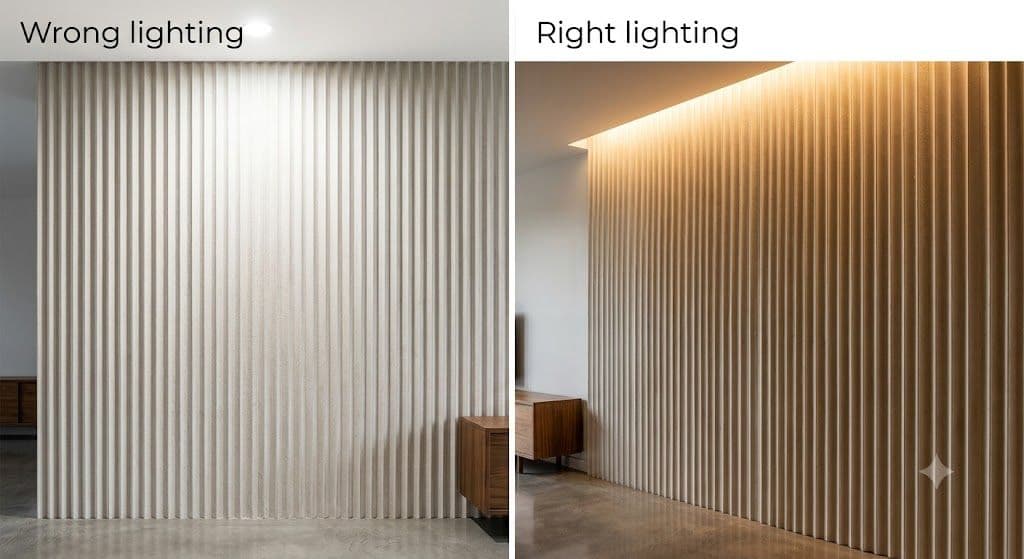
3. Ignoring the lighting Textured tiles need directional light to show their depth. If your room has only overhead downlights pointing straight down, the shadow play is minimal. Add a wall washer, cove light, or floor lamp that throws light at an angle across the surface.
4. Mixing too many textures Fluted tiles already do a lot visually. Keep everything else in the room simple — plain flooring, solid-colour furniture, minimal accessories.
Conclusion
Fluted and textured ceramic wall tiles are not a passing fad. They solve a real problem — how to make a wall interesting without paint, wallpaper, or expensive stone cladding. One well-chosen textured ceramic wall in your bathroom, living room, or kitchen does more for the feel of a space than almost any other single upgrade.
Pick your wall, pick your tone (warm neutrals are safest), and get the lighting right. The tile does the rest.
If you're planning a bathroom or living room renovation in Ahmedabad and want to see fluted tile samples in person, visit Deep Ceramics — we carry a range of textured and ribbed ceramic wall tiles across finishes and formats.
FAQs
Q: Are fluted ceramic wall tiles hard to clean? A: The grooves do collect dust, but a damp cloth or soft brush clears them easily. Avoid abrasive scrubbers. For bathrooms, matte finish is easier to maintain than glossy — it hides water marks better.
Q: What size fluted tile works best for a small bathroom? A: Taller, narrower tiles (such as 300×600mm or 200×1200mm in portrait orientation) make a small bathroom feel taller. Avoid very large format tiles in bathrooms under 40 sq ft.
Q: Can I use fluted tiles behind the kitchen stove? A: For the area directly behind the hob, choose a smooth or semi-gloss finish — easier to clean oil splatter. Ribbed or fluted tiles are fine for the rest of the backsplash away from direct heat and grease.
Q: What's the difference between fluted and ribbed tiles? A: Fluted tiles have wider, more widely spaced grooves. Ribbed tiles have tighter, finer grooves. Both create a similar shadow effect — fluted is bolder, ribbed is more subtle. Both are ceramic wall tiles.
Q: Do textured ceramic wall tiles cost more than plain tiles? A: Yes, generally. Expect a 20–40% premium over a comparable plain ceramic tile of the same size, depending on the brand and surface complexity. The design impact-to-cost ratio is still very strong compared to stone cladding or wallpaper.
Internal Link Suggestions
(Add URLs once the pages exist on deepceramics.in)
- Link "ceramic vs vitrified tiles" → suggested post: Ceramic vs Vitrified Tiles — Which Should You Choose?
- Link "bathroom tile ideas" → suggested post: Top Bathroom Tile Design Ideas for Indian Homes 2026
Published by Deep Ceramics, Ahmedabad — your local tile and sanitaryware specialists.