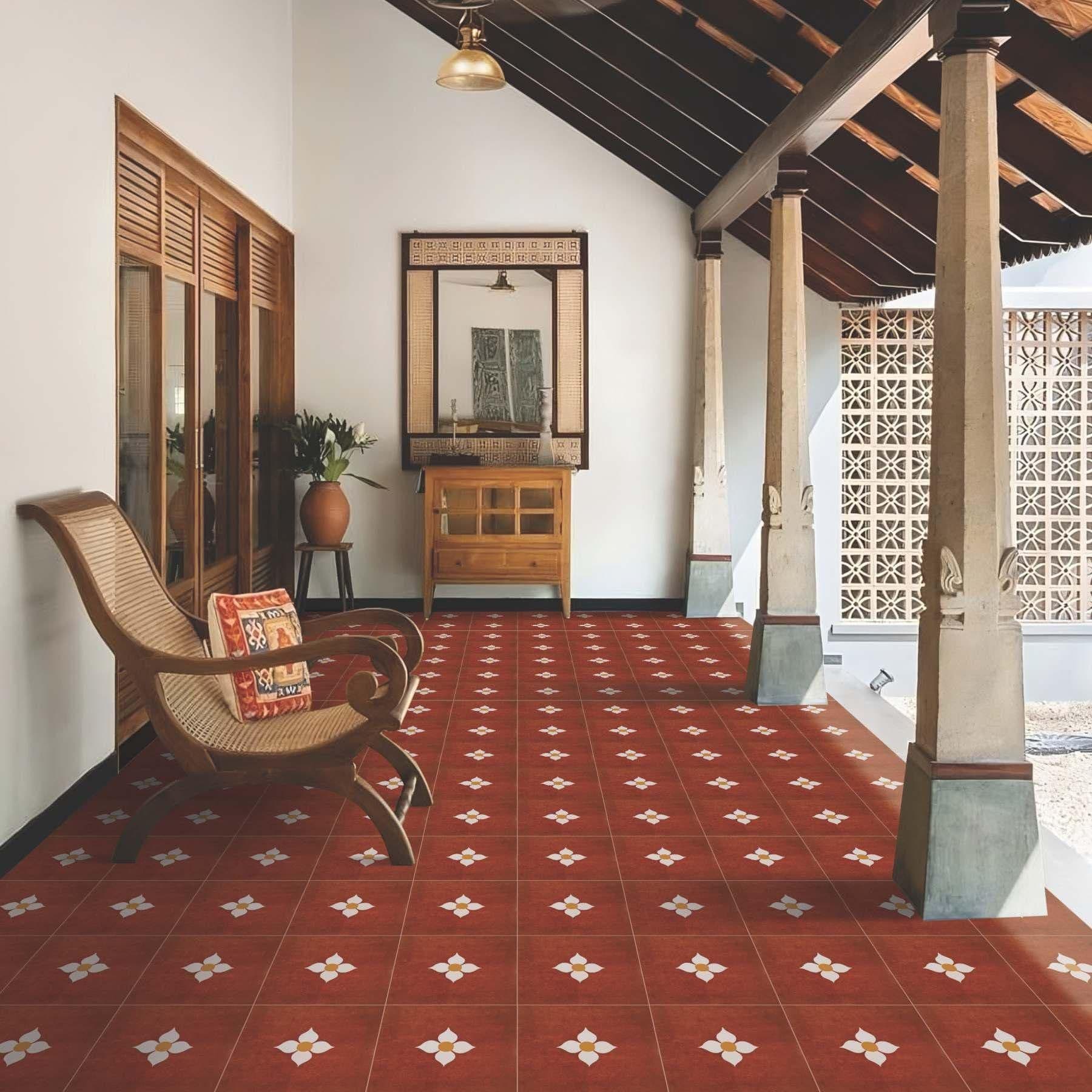
How to Choose the Right Tiles for Indian Homes — A Technical Deep Dive
By Deep Ceramics & Co. | August 2026
Choosing the wrong tile is one of the most expensive mistakes in home construction. Once laid, a tile is there for 20–30 years. This guide gives you the engineering and material science behind the decision — so you choose once, and choose right.
The Indian Home — Why It's a Unique Tiling Environment
India is not Europe. Before applying any global tiling guide to your home, understand the specific stresses Indian conditions put on a tile:
Factor
India-Specific Reality
Temperature swing
5°C winter to 45°C summer in most of India — tiles expand and contract every year
Monsoon humidity
80–100% RH for 3–4 months → moisture infiltration risk
Barefoot culture
Most Indians walk barefoot indoors → slip resistance and surface temperature matter
Heavy cleaning
Daily mopping with water + phenyl/acid cleaners → chemical resistance is non-negotiable
Structural movement
Indian construction often uses RCC slabs that continue to cure for years → floor movement is real
Every technical parameter in this guide is explained with this Indian context in mind.
2. Tile Classification — What Are You Actually Buying?
2.1 By Material
Tiles
├── Ceramic
│ ├── Wall tiles (non-vitrified, porous)
│ └── Floor tiles (semi-vitrified)
├── Vitrified
│ ├── Full Body Vitrified (FBV)
│ ├── Double Charged Vitrified (DCV)
│ ├── Glazed Vitrified Tiles (GVT)
│ └── Full Glazed Vitrified (FGVT / Nano)
├── Natural Stone
│ ├── Marble
│ ├── Granite
│ └── Slate / Sandstone
└── Mosaic / Glass
2.2 By Water Absorption — The Most Important Classification
The BIS IS 13630 standard classifies tiles by water absorption (Wa):
Group
Water Absorption
Tile Type
Use Case
Ia
Wa ≤ 0.5%
Fully vitrified
High traffic floors, outdoor
Ib
0.5% < Wa ≤ 3%
Vitrified
Residential floors
IIa
3% < Wa ≤ 6%
Semi-vitrified
Light traffic floors
IIb
6% < Wa ≤ 10%
Ceramic floor tile
Dry areas only
III
Wa > 10%
Ceramic wall tile
Walls only — NEVER floors
“Indian rule of thumb: For any wet area (bathroom, kitchen, balcony, terrace), use Group Ia or Ib only. Group III wall tiles used on floors will crack within 1–2 monsoon seasons.
3. Material Science of Vitrification
3.1 What "Vitrified" Actually Means
Vitrification is the transformation of a clay-based body into a glass-like (vitreous) structure through high-temperature sintering.
The chemistry:
Raw mix: Kaolin (Al₂Si₂O₅(OH)₄) + Feldspar (KAlSi₃O₈) + Quartz (SiO₂) + Flux
Firing temperature: 1200°C – 1250°C
Reaction:
Al₂Si₂O₅(OH)₄ → Al₂O₃ · 2SiO₂ + 2H₂O (at ~600°C, dehydroxylation)
Al₂O₃ · 2SiO₂ → Al₂SiO₅ (mullite) + SiO₂ (amorphous) (at >1000°C)
Feldspar melts → fills pores with glassy phase → near-zero porosity
The resulting microstructure is a mullite crystal network embedded in a glassy silicate matrix — this is what gives vitrified tiles their strength and near-zero water absorption.
3.2 Porosity and Strength Relationship
Porosity directly reduces mechanical strength. The Ryshkewitch equation describes this:
σ = σ₀ · e^(−bP)
Where:
σ = strength of porous tile (MPa)
σ₀ = strength of fully dense (zero porosity) tile (MPa)
b = empirical constant (~4–7 for ceramics)
P = porosity fraction (volume fraction of pores)
Example:
σ₀ = 40 MPa (dense vitrified body)
P = 0.10 (10% porosity — typical ceramic wall tile)
b = 5
σ = 40 × e^(−5 × 0.10) = 40 × e^(−0.5) = 40 × 0.607 = 24.3 MPa
vs
P = 0.005 (0.5% porosity — Group Ia vitrified)
σ = 40 × e^(−5 × 0.005) = 40 × e^(−0.025) = 40 × 0.975 = 39 MPa
Takeaway: A fully vitrified tile is ~60% stronger than a standard ceramic wall tile. That's not marketing — it's material physics.
4. Slip Resistance — The Equation That Saves Lives
The single most under-discussed tile parameter in India. Every year, thousands of bathroom falls happen on glossy tiles.
4.1 Coefficient of Friction (COF)
Tile slip resistance is measured by the Dynamic Coefficient of Friction (DCOF):
DCOF = F_friction / F_normal = μ
Where:
F_friction = tangential force resisting sliding (N)
F_normal = perpendicular (normal) force (N)
Test method: ANSI A137.1 (wet DCOF using a tribometer)
4.2 Indian Standards & Safe Thresholds
DCOF Value
Classification
Recommended Use
< 0.42
Slippery
Do NOT use on floors
0.42 – 0.60
Acceptable
Dry indoor floors (living room, bedroom)
0.60 – 0.80
Good
Kitchen, bathroom with mats
> 0.80
Excellent
Wet bathrooms, outdoor, elderly homes
“The physics: On a wet floor, the water film acts as a lubricant. Effective COF drops by 30–50% from dry to wet conditions. A tile with dry COF of 0.60 may effectively have wet COF of ~0.35 — dangerously slippery.
4.3 The R-Rating System (DIN 51130)
German-origin R-ratings are widely used in India by specification architects:
R-Rating
Angle of Inclination
Application
R9
6° – 10°
Dry indoor areas
R10
10° – 19°
Kitchens, bathrooms
R11
19° – 27°
Outdoor, wet areas
R12
27° – 35°
Industrial, ramps
R13
> 35°
Extreme wet/industrial
For Indian bathrooms: minimum R10. For elderly homes or hospitals: R11 or above.
5. Tile Strength — Reading the Numbers
5.1 Modulus of Rupture (MOR)
MOR measures how much bending force a tile can take before cracking. Tested per IS 13630 Part 6:
MOR = (3 × F × L) / (2 × b × d²)
Where:
F = breaking force (N)
L = span between supports (mm)
b = width of tile (mm)
d = thickness of tile (mm)
Minimum MOR values (IS 13630):
Ceramic wall tile: ≥ 15 N/mm²
Ceramic floor tile: ≥ 22 N/mm²
Vitrified tile: ≥ 35 N/mm²
Full body vitrified: ≥ 45 N/mm²
5.2 Breaking Strength (Absolute Load)
Breaking Strength = MOR × (b × d²) / (3 × L/2)
For a standard 600×600×9mm vitrified tile:
MOR = 35 N/mm²
b = 600 mm
d = 9 mm
L = 270 mm (standard test span)
Breaking Strength = 35 × (600 × 81) / (3 × 135)
= 35 × 48600 / 405
= 35 × 120
= 4,200 N ≈ 428 kg
That tile can support 428 kg of point load before cracking.
This is why 600×600 vitrified tiles are safe for Indian homes — typical furniture loads are 100–200 kg, well within limits.
6. Thermal Expansion — Why Gaps Are Not Optional
6.1 Linear Thermal Expansion
All tiles expand with heat and contract with cold. The governing equation:
ΔL = α × L₀ × ΔT
Where:
ΔL = change in length (mm)
α = coefficient of thermal expansion (per °C)
L₀ = original length (mm)
ΔT = temperature change (°C)
Typical α values:
Ceramic tile: 6–7 × 10⁻⁶ /°C
Vitrified tile: 6–8 × 10⁻⁶ /°C
Marble: 11–12 × 10⁻⁶ /°C
Granite: 8–10 × 10⁻⁶ /°C
Cement screed (sub): 10–14 × 10⁻⁶ /°C
6.2 Expansion in Indian Climate Context
For a 10m long floor of vitrified tiles in Ahmedabad (ΔT = 40°C, summer-winter swing):
ΔL = 7 × 10⁻⁶ × 10,000 mm × 40°C
= 7 × 10⁻⁶ × 400,000
= 2.8 mm
The floor expands 2.8mm over 10 metres.
This is why expansion joints every 4–5 metres are mandatory per IS 13630. Without them, compressive stress builds up:
Compressive stress σ = E × ε = E × (ΔL / L₀)
E (Young's modulus of vitrified tile) ≈ 60–80 GPa
ε = 2.8 / 10,000 = 0.00028
σ = 70 × 10³ MPa × 0.00028 = 19.6 MPa
Tile compressive strength ≈ 600–900 MPa → safe
BUT adhesive + grout joint strength ≈ 3–5 MPa → FAILS
Result: tiles pop up ("tenting") — extremely common in Indian homes with no expansion joints.
“This is the #1 cause of floor tile lifting in India. Not the tile quality — the missing expansion joints.
7. Tile Size Selection — Room Geometry Mathematics
7.1 The Tile Layout Equation
Choosing the right tile size for a room is a geometry problem. The goal: minimize cut tiles, especially at visible edges.
Number of whole tiles (one direction):
N_whole = floor(Room_dimension / Tile_size)
Cut tile width:
C = Room_dimension - (N_whole × Tile_size) - (N_whole × Grout_width)
For symmetrical layout (cuts equal on both sides):
Edge cut = C / 2
Rule: Edge cut should be > 50% of tile size
i.e., C / 2 > Tile_size / 2
i.e., C > Tile_size
7.2 Worked Example
Room: 3600mm × 4200mm
Tile: 600×600mm, grout joint: 3mm
Along 3600mm:
N = floor(3600 / (600 + 3)) = floor(3600 / 603) = 5 whole tiles
Used = 5 × 603 = 3015mm
Remaining = 3600 − 3015 = 585mm (plus one more 3mm joint)
C ≈ 582mm → Edge cut = 291mm
291mm > 300mm? → NO (just under half tile)
→ Shift layout by 9mm to get edge cut ≥ 300mm ✓
Along 4200mm:
N = floor(4200 / 603) = 6 whole tiles
Used = 6 × 603 = 3618mm
Remaining = 4200 − 3618 = 582mm
Edge cut = 291mm → borderline, shift origin point slightly ✓
This calculation is done before a single tile is laid — it's how professionals plan layouts.
7.3 Visual Impact of Tile Size
Room Size
Recommended Tile Size
Reason
< 50 sq ft (small bathroom)
300×300 or 300×600
Fewer cuts, fits proportionally
50–150 sq ft (bedroom, kitchen)
600×600 or 600×1200
Modern look, fewer joints
> 150 sq ft (living room, hall)
800×800, 1000×1000, or large format slabs
Grand scale, seamless look
Walls (any room)
300×600 or 300×900 (vertical lay)
Creates height illusion
8. Double Charged vs GVT vs Full Body Vitrified — What's the Difference?
8.1 Manufacturing Process Comparison
Double Charged Vitrified (DCV):
Process:
Base layer (body color) → pressed
Second layer (design color, ~3–4mm thick) → pressed on top
Co-fired at 1200°C
Result:
Pattern depth: ~3–4mm
Wear resistance: HIGH (pattern survives deep scratching)
Design variety: LOW (limited to 2-layer geometric patterns)
Glazed Vitrified Tiles (GVT):
Process:
Vitrified body → fired
Digital inkjet glaze applied on surface → re-fired
Result:
Pattern depth: ~0.3–0.5mm (surface only)
Wear resistance: MODERATE (glaze wears over years in high traffic)
Design variety: UNLIMITED (any image, marble look, wood look, etc.)
Full Body Vitrified (FBV):
Process:
Single uniform body composition throughout full thickness
Result:
Pattern: uniform color only (no design)
Wear resistance: MAXIMUM (same color top-to-bottom, chips invisible)
Use: Industrial, commercial, high-traffic
8.2 Choosing the Right Type for Indian Rooms
Room
Recommended Type
Reason
Living Room
GVT or Double Charged
Design matters, moderate traffic
Master Bedroom
GVT (marble/wood finish)
Aesthetics priority, low traffic
Kitchen Floor
Double Charged or FBV
High traffic, frequent wet mopping
Bathroom Floor
GVT (R10 rated)
Wet area + design
Bathroom Wall
Ceramic wall tile or GVT
Non-load-bearing, waterproofing key
Terrace/Balcony
Full Body Vitrified (Group Ia)
Outdoor, UV + rain exposure
Passage/Staircase
Double Charged or FBV
Maximum wear resistance
9. Adhesive and Grout Selection — The Ignored Layer
Most homeowners spend ₹1,000/sq ft on tiles and ₹5/kg on adhesive. This is backwards thinking.
9.1 Adhesive Types
Type
Shear Strength
Use Case
Cement mortar (traditional)
0.5–1.0 MPa
Small tiles on floors (old method)
Polymer-modified adhesive (C1)
1.0–1.5 MPa
Standard tiles, walls
Improved polymer adhesive (C2)
≥ 1.5 MPa
Large format tiles (>600mm), wet areas
Epoxy adhesive (R2)
2.0–3.0 MPa
Chemical-resistant areas, acid exposure
For large format tiles (800×800 and above), minimum C2 adhesive is mandatory. Here's why:
Self-weight of 800×800×10mm vitrified tile:
Volume = 0.8 × 0.8 × 0.01 = 0.0064 m³
Density of vitrified tile ≈ 2300 kg/m³
Mass = 0.0064 × 2300 = 14.7 kg
Weight = 144 N
Shear stress on adhesive bond:
Bond area = 0.64 m² = 640,000 mm²
Required shear strength = 144 / 640,000 = 0.000225 MPa
This seems low — but consider:
Thermal expansion generates additional stress (calculated above: ~19.6 MPa at extreme)
Dynamic loads from walking: impact factor ~2×
Wet/dry cycling degrades C1 adhesive by 30–40% over 5 years
→ C2 adhesive provides safety factor of 3–5× over C1 for large tiles in wet areas.
9.2 Grout Selection
Grout Type
Joint Width
Water Resistance
Use
Cement grout (unsanded)
< 3mm
Low
Dry interior walls
Cement grout (sanded)
3–12mm
Moderate
Floor joints
Epoxy grout
Any
Excellent
Kitchens, bathrooms, pools
Fusion/Urethane grout
1.5–6mm
Very Good
Wet areas, hygienic spaces
“Indian bathroom reality: Standard cement grout turns black with mold within 1–2 monsoon seasons. Epoxy grout costs 3–4× more but lasts 10× longer and stays white. For bathroom joints — always epoxy grout.
10. Natural Stone vs Vitrified — The Trade-off Table
Parameter
Marble
Granite
Vitrified Tile
Water Absorption
0.4–1.5%
0.1–0.4%
0.05–0.5%
Hardness (Mohs)
3–4
6–7
5–7
MOR (MPa)
10–20
15–25
35–55
Acid resistance
POOR (HCl reacts with CaCO₃)
Good
Excellent
Maintenance
High (annual polishing)
Low
Very Low
Thermal feel (barefoot)
Cold
Cold
Less cold
Cost (₹/sq ft, India)
₹80–500+
₹60–200
₹40–300
Consistency
Variable (natural variation)
Variable
Uniform
The Acid Test for Marble
Marble is calcium carbonate (CaCO₃). It reacts with acids — including the citric acid in lemon juice and the acetic acid in vinegar:
CaCO₃ + H₂SO₄ → CaSO₄ + H₂O + CO₂↑
CaCO₃ + 2HCl → CaCl₂ + H₂O + CO₂↑
Rate of reaction increases with:
- Higher acid concentration
- Higher temperature (Indian kitchens)
- Rougher surface (more surface area)
This is why marble in Indian kitchens etches and dulls over time — the daily cooking environment is mildly acidic. For kitchens, always choose granite or vitrified tiles over marble.
11. Sanitaryware — Material Specifications
Since tiles and sanitaryware always go together, here's the material science for the other half of your bathroom.
11.1 Vitreous China vs Porcelain Sanitary Ware
Property
Vitreous China
Fireclay
Acrylic
Composition
Kaolin + Feldspar + Quartz, glazed
Denser clay, thicker walls
PMMA polymer
Firing temp
1200°C
1280°C
N/A
Water absorption
< 0.5%
< 0.5%
N/A
Surface hardness
5–6 Mohs
6–7 Mohs
2–3 Mohs (scratches easily)
Weight (typical WC pan)
25–35 kg
40–60 kg
8–15 kg
Lifespan
25–50 years
50+ years
10–15 years
Cost (relative)
₹
₹₹
₹ (but higher replacement cost)
11.2 Flushing Efficiency — The Hydraulics
A good flush requires sufficient volume delivered at adequate velocity to clear the pan. The Froude number governs the hydraulic bore in the trapway:
Fr = v / √(g × d)
Where:
v = flow velocity in trapway (m/s)
g = 9.81 m/s²
d = hydraulic depth (m)
For effective siphonic flush: Fr > 1 (supercritical flow)
Typical 6L dual flush WC:
Volume = 6 litres = 0.006 m³
Flush time ≈ 3s
Flow rate = 0.002 m³/s
Trapway diameter = 50mm → area = 0.00196 m²
v = 0.002 / 0.00196 ≈ 1.02 m/s
d = 0.05m
Fr = 1.02 / √(9.81 × 0.05) = 1.02 / 0.7 = 1.46 → supercritical ✓
A 3-litre flush (water-saving mode) may drop below Fr = 1, risking incomplete clearing — which is why cheap water-saving WCs fail.
12. Room-by-Room Tile Selection Guide for Indian Homes
Living Room
- Floor: 800×800 GVT or 600×1200 large format. Light beige/grey marble-look finish. Matte or satin finish (not high gloss — shows footprints).
- Feature wall: Textured ceramic or 3D wall tiles as accent panel behind sofa.
- Grout: Matching unsanded cement grout.
Master Bedroom
- Floor: 600×600 or 800×800 GVT wood-finish or marble-look. Warm tones (ivory, cream, light grey).
- Finish: Matte preferred — softer visual, warmer underfoot.
- Avoid: High gloss, dark colors (shows dust in Indian climate).
Kitchen
- Floor: 600×600 Double Charged or FBV. Dark tones hide stains. Matt/anti-slip finish.
- Wall: 300×600 ceramic wall tiles. White or light grey — brightens kitchen.
- Backsplash: 75×300 subway tiles or mosaic — easy to clean, grease-resistant glaze.
Master Bathroom
- Floor: 300×300 or 300×600 GVT, R10 rated. Non-slip matte or textured.
- Wall: 300×600 vertical lay (creates height). Light marble-look or solid color.
- Niche/Accent: Mosaic or metallic-finish tile in shower niche.
- Grout: Epoxy — non-negotiable.
Balcony / Terrace
- Group Ia vitrified only (Wa < 0.5%).
- R11 or above slip resistance — rain makes balconies dangerous.
- UV-stable glaze — outdoor tiles must withstand UV without fading.
- Frost resistance (for North India): Check manufacturer's frost cycle rating (≥ 100 cycles per EN ISO 10545-12).
13. How to Read a Tile Spec Sheet — Decoded
When you pick up a tile box or ask for a spec sheet, here's what the numbers mean:
Spec
What to Look For
Minimum (Indian Home)
Water Absorption
Group Ia (≤ 0.5%) for floors
≤ 3% for floor, ≤ 10% for wall
MOR
Higher = stronger
≥ 35 N/mm² for floor
DCOF (wet)
Higher = safer
≥ 0.42 (≥ 0.60 for wet areas)
Scratch Hardness
Mohs scale
≥ 5 for floor tiles
Chemical Resistance
Classes A–E (A = best)
Class B minimum for kitchen/bathroom
Frost Resistance
Yes/No
Yes for outdoor/North India
Size Tolerance
±0.5% on dimensions
±0.5% or better
Thickness Tolerance
±5% on stated thickness
±5%
14. The Real Cost of Cheap Tiles — A 10-Year Financial Model
Many homeowners try to save ₹20–30/sq ft by going for cheap tiles. Here's the actual 10-year math for a 1,000 sq ft home:
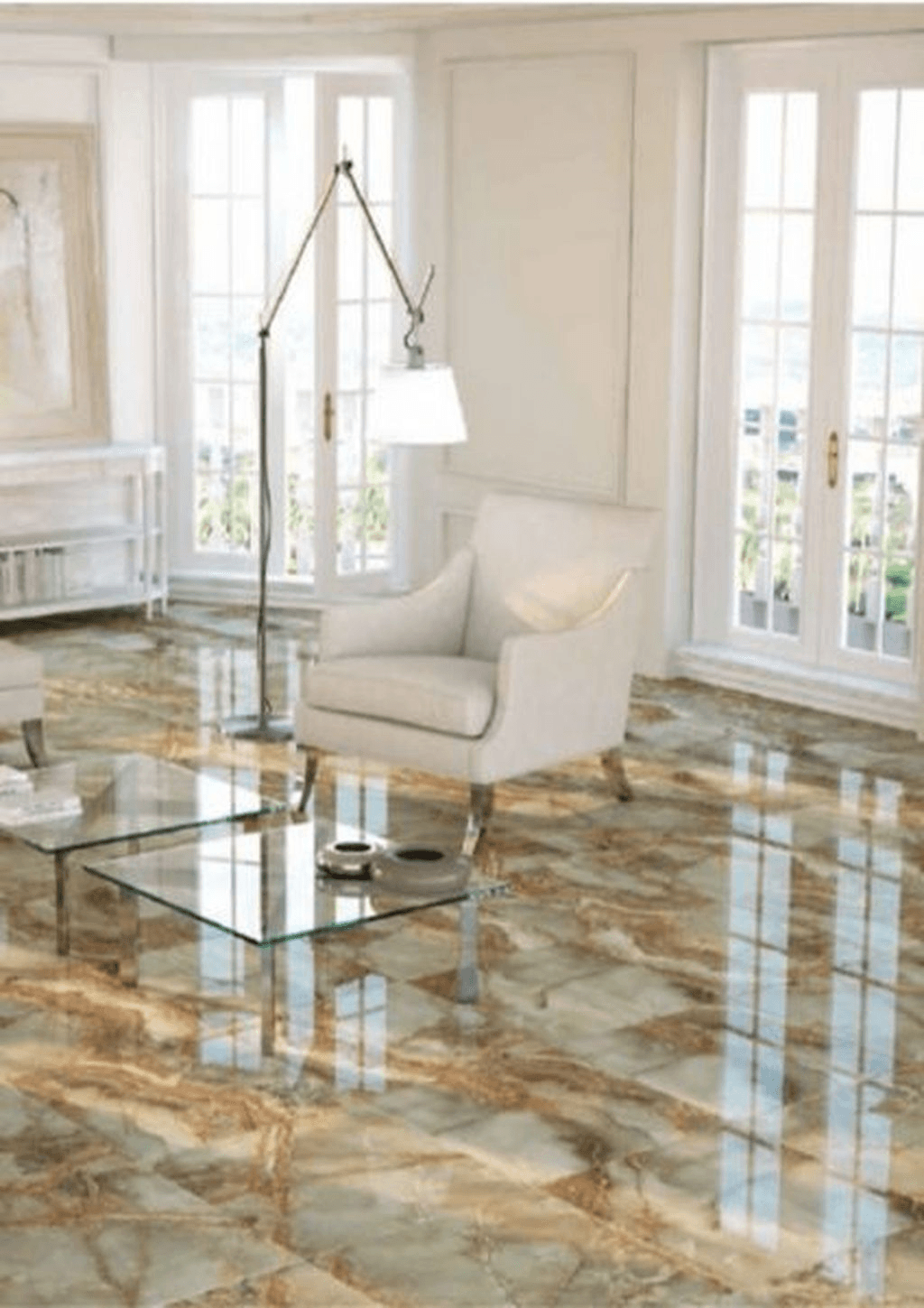
Scenario A: Premium Vitrified (₹120/sq ft)
Tile cost: 1000 × ₹120 = ₹1,20,000
Installation: 1000 × ₹60 = ₹60,000
Maintenance (10y): ₹5,000/year = ₹50,000
Replacement: ₹0 (25-year life)
─────────────────────────────────────────────
Total (10y): ₹2,30,000
Scenario B: Cheap Ceramic (₹45/sq ft)
Tile cost: 1000 × ₹45 = ₹45,000
Installation: 1000 × ₹60 = ₹60,000
Maintenance (10y): ₹8,000/year = ₹80,000
Partial replacement at year 5: ₹60,000 (chipping, tenting, cracks)
Re-grouting at year 3: ₹15,000
─────────────────────────────────────────────
Total (10y): ₹2,60,000
The cheap tile costs ₹30,000 more over 10 years — plus the disruption of living through repairs.
Conclusion — The Engineer's Checklist
Before buying any tile, run through this checklist:
- [ ] Water absorption — Group Ia/Ib for all wet areas and floors
- [ ] Slip resistance — DCOF ≥ 0.60 or R10 for bathrooms; R11 for outdoor
- [ ] MOR ≥ 35 N/mm² for all floor applications
- [ ] Size matches room — calculate layout to avoid narrow edge cuts
- [ ] Thermal expansion joints planned every 4–5m in floor
- [ ] Adhesive grade — C2 for large format (>600mm), epoxy for wet areas
- [ ] Epoxy grout for all bathroom and kitchen joints
- [ ] Frost resistance declared for balcony/terrace/North India
A tile is a 25-year decision. Spend an extra hour on the specification. Spend a little more on the right product. The floor you walk on every morning for the next three decades is worth it.
Have questions about tile selection for your project? Visit us at deepceramics.in or chat with us on WhatsApp — we'll help you choose right the first time.
© 2026 Deep Ceramics & Co., Ahmedabad, Gujarat
References: BIS IS 13630, ANSI A137.1, DIN 51130, EN ISO 10545 series